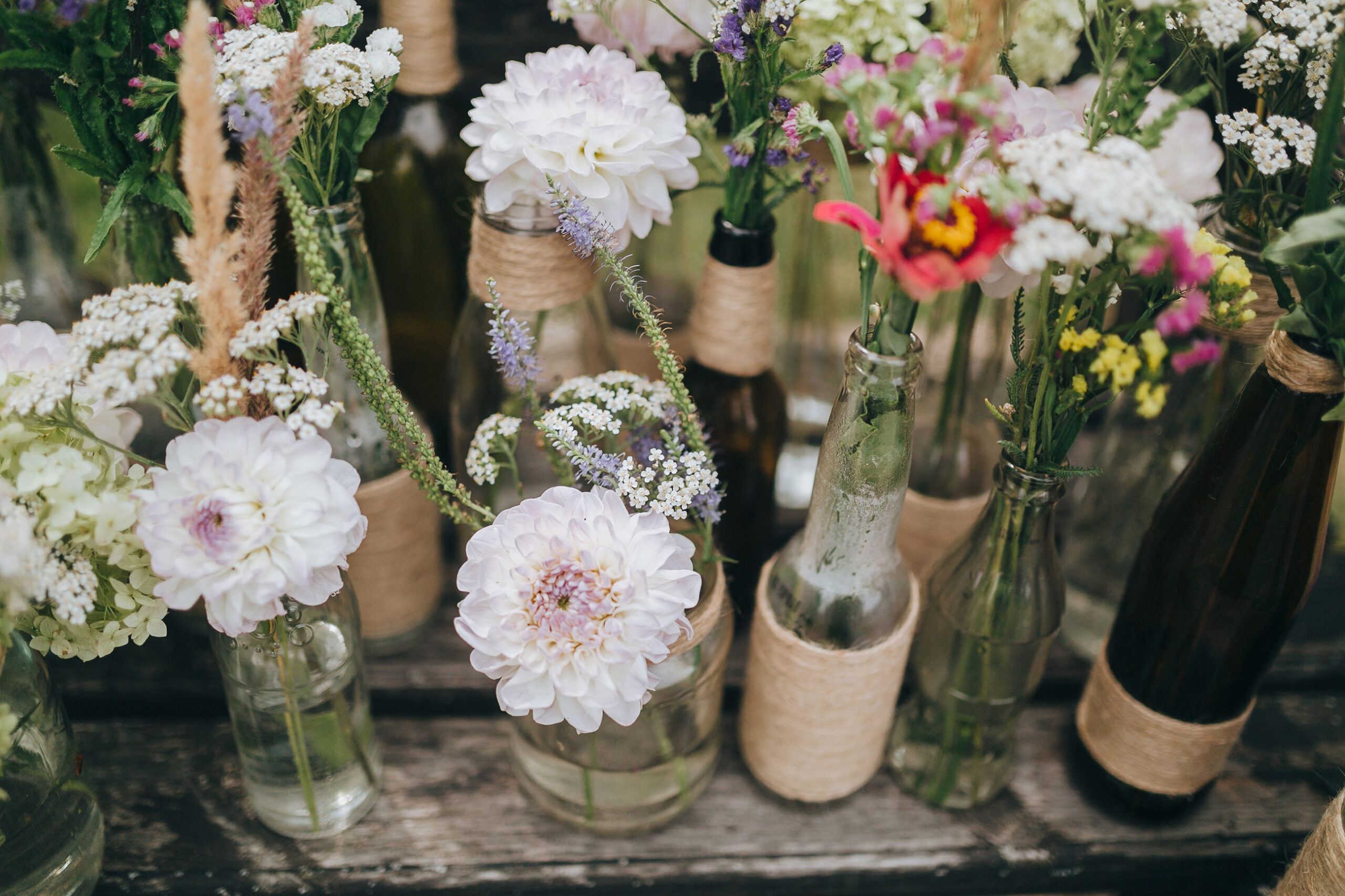
Wedding Bouquet Styles Predicted Trends for 2026
Your bridal bouquet is more than just flowers; it is a central style statement, a focal point in every photograph, and the accessory you’ll carry down the aisle. As we look toward 2026, the trend landscape for wedding bouquet styles is shifting towards sculptural designs, organic shapes, and deep personalisation.
To help you match your personal aesthetic with modern floral trends, here is your guide, created by a team with extensive experience in wedding design and execution, detailing the 7 most popular bouquet shapes, who they suit, and why they are trending now.
1. The Asymmetrical / Free-Form Bouquet (The Unruly Trendsetter)
The asymmetrical or “free-form” bouquet is the undisputed leader in 2026 wedding bouquet styles. It embodies the bespoke, organic, and contemporary aesthetic that many modern couples seek.
What it is: This style is characterised by its intentional imbalance, appearing as if the flowers were freshly gathered from a wild garden. It uses varying lengths of foliage, blooms, and textural elements (like pampas grass or trailing vines) to create significant movement and an irregular, artistic shape.
Why it’s trending: This style perfectly embodies the modern demand for a bespoke, sculptural look. It photographs beautifully, providing depth and dimension that more structured bouquets can’t match. Florists frequently recommend this shape for incorporating sustainable, locally sourced, and seasonal blooms.
Best for: Bohemian, rustic, garden, or modern-minimalist weddings. It pairs well with flowing A-line or sheath-style dresses.
2. The Cascading Bouquet (The Elegant Revival)
A classic shape enjoying a sophisticated comeback, the cascading style wedding bouquet is all about drama and elegance. This is a choice frequently recommended by event coordinators for grand, formal settings.
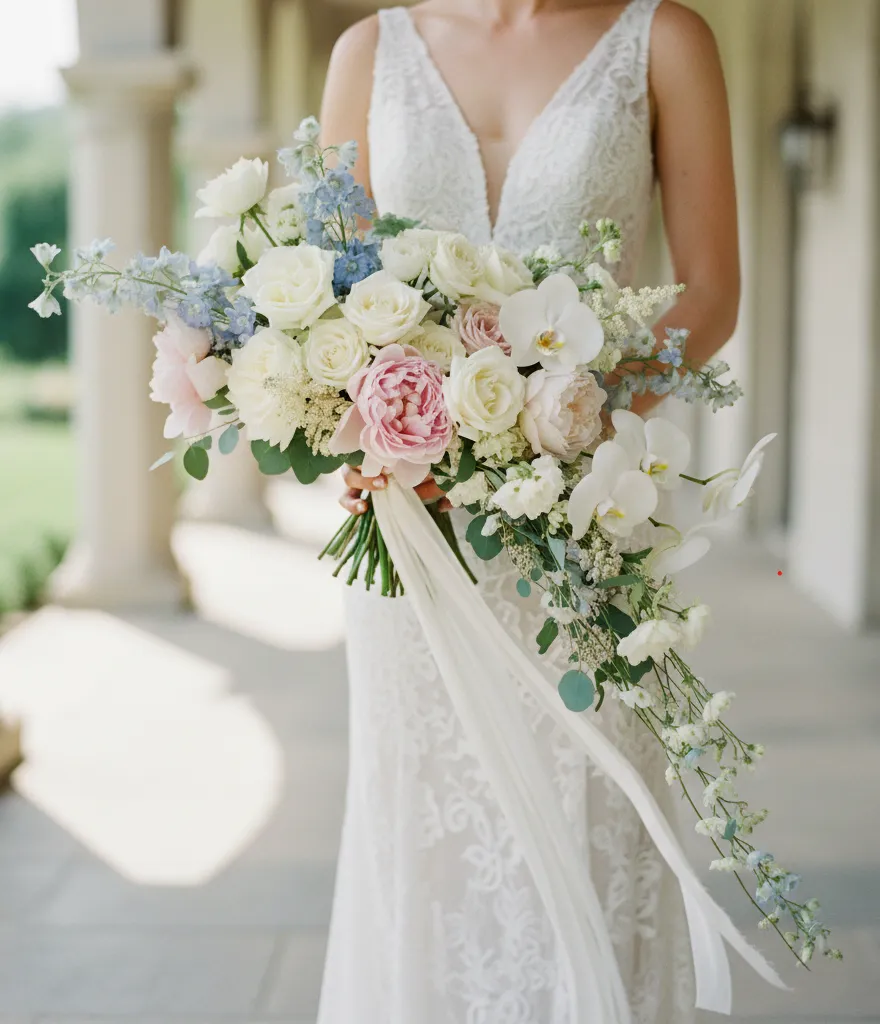
What it is: Also known as a “shower” bouquet, this arrangement is rounded at the top but features a waterfall of flowers and greenery that trails downward over the bride’s hands and gown.
Why it’s trending: Modern cascades are softer and looser than the structured versions of the past. Today’s iteration uses lighter vines, orchids, or long-stemmed foliage to create a gentle, natural flow that suits elegant, classic, and black-tie affairs. It is particularly popular for drawing the eye down, beautifully complementing long, sleek gowns.
Best for: Formal, traditional, and glamorous black-tie weddings. It beautifully complements mermaid, trumpet, or sleek, column dresses.

3. The Hand-Tied Bouquet (The Timeless Favourite)
The hand-tied bridal bouquet is the most common and versatile choice, popular for its natural, unforced aesthetic and ease of construction, a detail florists rely on.
What it is: A simple bunch of flowers with stems left exposed (or partially wrapped), arranged loosely in the florist’s hand and secured with a ribbon, twine, or fabric. It offers a relaxed, slightly wider silhouette.
Why it’s trending: It fits the highly desired “just-picked” aesthetic that remains hugely popular. It’s adaptable to almost any style—from a lush, romantic mix of roses and peonies to a simple, monochromatic arrangement of calla lilies or tulips. It’s a comfortable, easy-to-carry shape.
Best for: Brides seeking a timeless, relaxed look; perfect for almost any venue, from a barn to a grand wedding hall.

4. The Round Bouquet (The Monochromatic Masterpiece)
The traditional round bouquet is a clean, classic shape that is reinventing itself through focused colour and texture—a technique mastered by experienced floral designers.
What it is: Flowers are cut to a uniform length and tightly arranged into a symmetrical, clean dome shape. This style traditionally includes minimal to no foliage.
Why it’s trending: While never truly out of style, the round bouquet is trending for 2026 in two key, sophisticated ways: monofloral (only one type of flower, like all roses or all peonies) and monochromatic (using varying shades of a single colour, like all tones of blush or dusty mauve) to create richness and visual depth.
Best for: Formal, traditional, or European-inspired weddings. It pairs perfectly with voluminous ballgowns or structured A-line dresses.

5. The Long-Stem / Pageant Bouquet (The Sleek Statement)
Also known as the “Presentation Bouquet” or “Arm Sheath,” this style is ideal for the minimalist bride and is favoured for high-fashion, architectural settings.
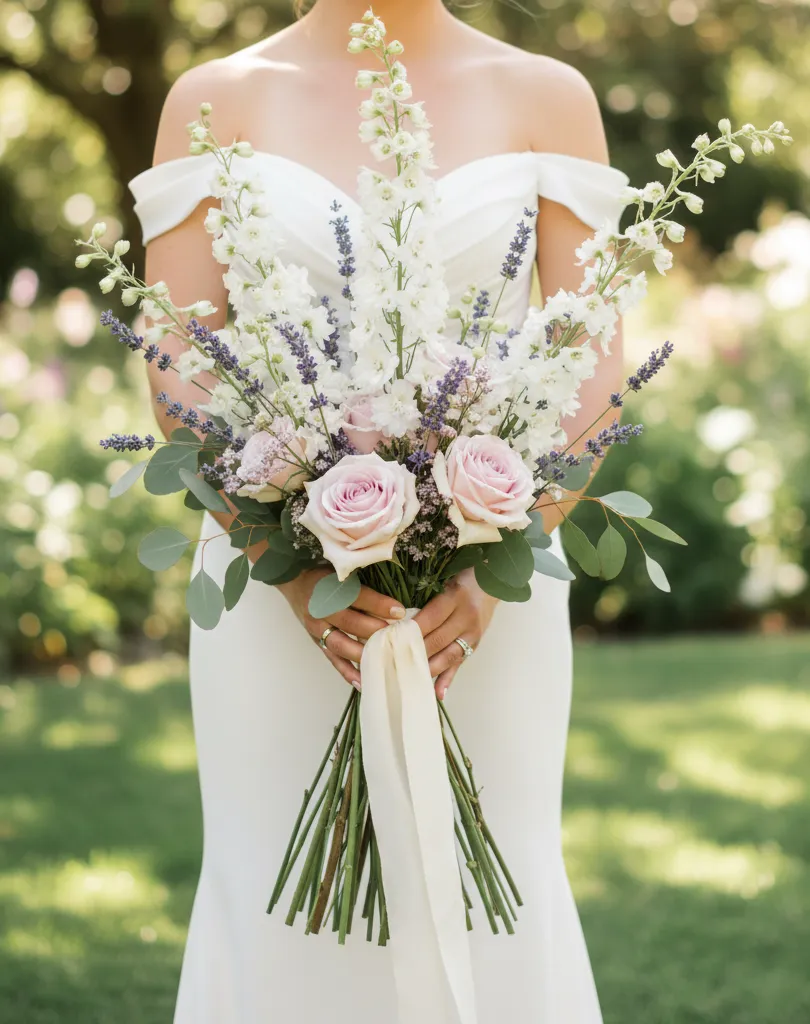
What it is: A collection of long-stemmed flowers (often roses, calla lilies, or delphiniums) that are designed to be cradled elegantly in the crook of the bride’s arm rather than held by the stems.
Why it’s trending: This style offers a sleek, chic, and architectural look that aligns with the rise of modern, minimalist wedding design. It draws the eye vertically, complementing clean lines in both the dress and the venue.
Best for: Modern, city, or gallery-style weddings. It works beautifully with sophisticated, high-neck, or tailored bridal suits and gowns.
6. The Posy Bouquet (The Subtle Sweetheart)
The posy is the smallest, most compact of the wedding bouquet styles, beloved for its delicate charm and practicality for smaller events.
What it is: A small, petite bouquet that can be easily held in one hand, featuring flowers cut to a uniform length and tightly bound. It is typically flower-heavy with very little foliage.
Why it’s trending: As bridal trends focus on personal comfort and simplicity, the posy offers a non-overwhelming choice. It is also an excellent option for micro-weddings, elopements, or as the coordinating shape for bridesmaids and flower girls due to its manageability.
Best for: Intimate ceremonies, elopements, or brides who want their dress and jewelry to be the primary focus.

7. The Crescent Bouquet (The Organic Curve)
The crescent bouquet is an organic bouquet style that offers a more stylised alternative to the full cascade, requiring careful placement by a skilled florist.
What it is: A curved, arching shape that is wider in the middle and tapers off at the ends, forming the shape of a subtle crescent moon. It usually features an abundance of flowers and foliage in the centre, with fewer blooms curving outwards.
Why it’s trending: Like the free-form style, the crescent is trending due to its movement and organic feel, but it offers a more structured elegance. It works beautifully to soften a sophisticated look without the full drama of a cascade.
Best for: Romantic, garden-inspired, or outdoor weddings.
Final Tip: Prioritise Personalisation
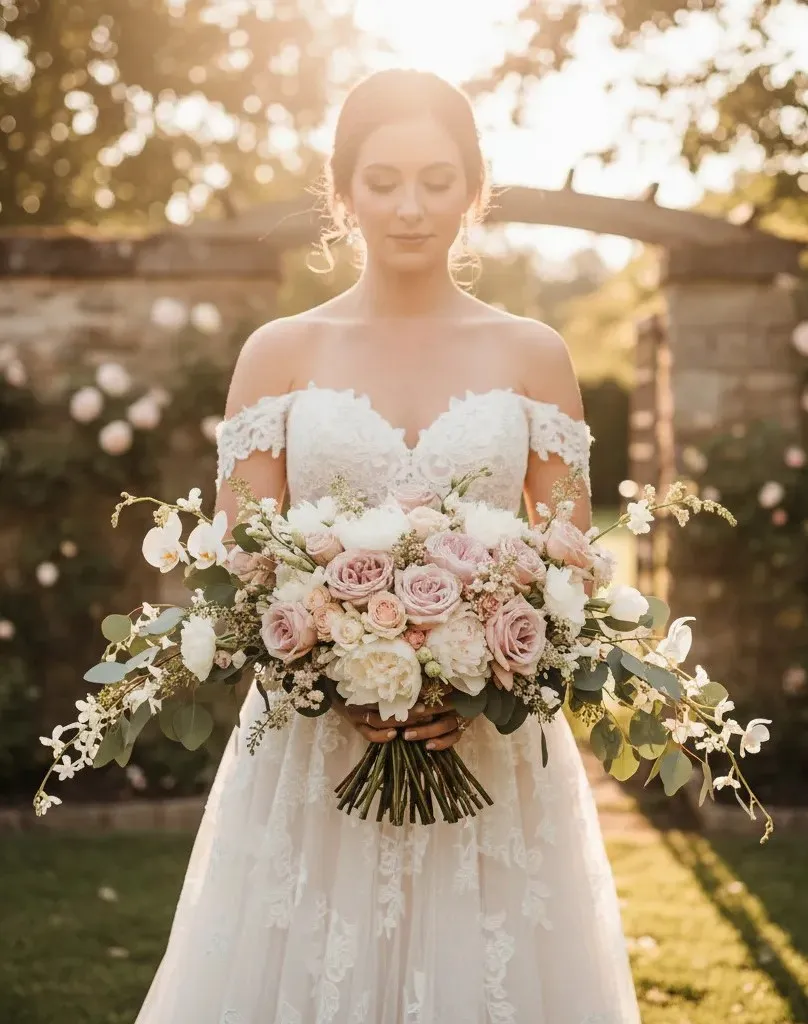
In 2026, the biggest overarching trend is personalisation. Don’t choose a style just because it’s popular; choose the style that feels authentic to your personality, complements the silhouette of your dress, and harmonises with the scale of your venue. The perfect florist will use their expertise to help you bring your vision to life, regardless of the trend cycle.
Ready to put these styles into action?
Contact The Compasses at Pattiswick today to arrange a private viewing or visit us on one of our open days and discover how our intimate Essex venue brings effortless style and genuine connection to your celebration. We would also be happy to recommend a few local florists we have worked with before for previous weddings, who are all capable of designing any beautiful wedding bouquet style.
Author Bio
This guide was written by the dedicated events team at The Compasses at Pattiswick, a charming countryside wedding venue nestled in rural Essex. Drawing on our experience hosting hundreds of small weddings, we specialise in intimate, relaxed celebrations where the focus is on great food, genuine connection, and effortless style. Our team works closely with trusted local suppliers to ensure every personalised day we create feels warm, elegant, and full of heart.